Tuesday, 30 December 2025
-- Advertisement --
dive soft ccr liberty

The extraordinary value of ancient lead

Listen to this article Many people have dreamt since childhood of finding treasure sunken in the depths of the sea. Usually in such cases gold, precious stones, magnificent, inlaid weapons or works of art come to mind. However, as it turns out, even bars of ancient lead can be of inestimable value to some. About
Published: December 9, 2013 - 11:42
Updated: July 22, 2023 - 03:36
The extraordinary value of ancient lead
Listen to this article

Many people have dreamt since childhood of finding treasure sunken in the depths of the sea. Usually in such cases gold, precious stones, magnificent, inlaid weapons or works of art come to mind. However, as it turns out, even bars of ancient lead can be of inestimable value to some.

-- Advertisement --

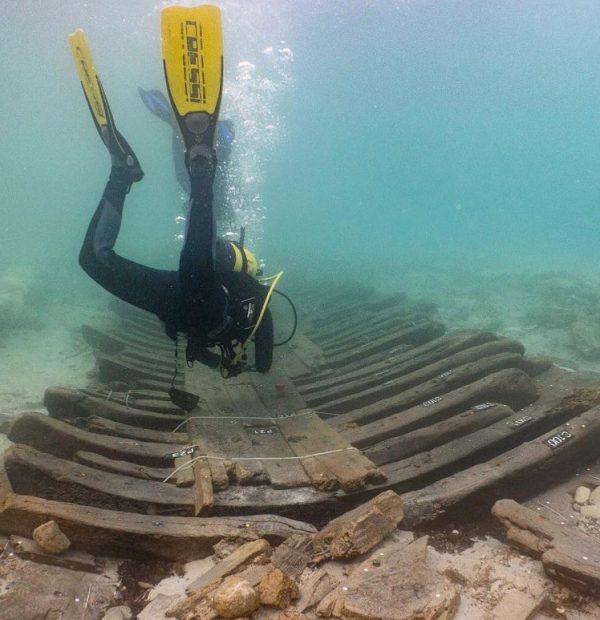
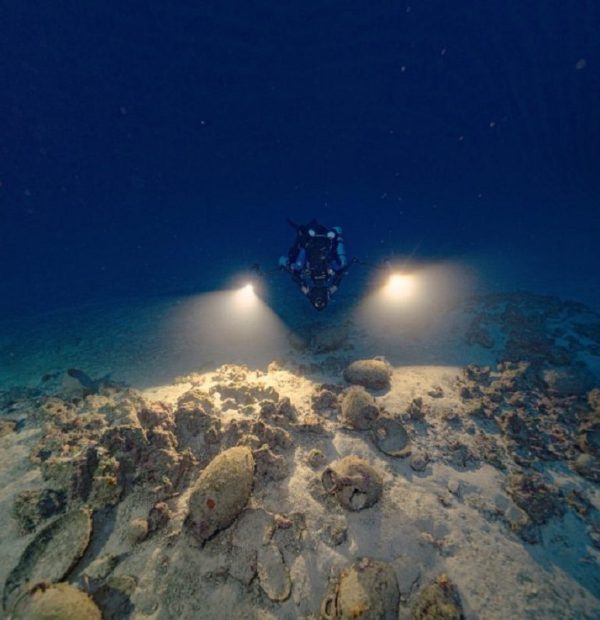
About 100 bars of lead extracted from an ancient Roman shipwreck near Sardinia were used to build the CUORE (Cryogenic Underground Observatory for Rare Events). The device was built at the Gran Sasso National Laboratory in Italy and is designed to detect elementary particles (neutrinos).

In turn, lead bars extracted by treasure hunters from an 18th century shipwreck off the coast of France were sold to CDMS (Cryogenic Dark Matter Search) and used to create a dark matter detector located in Minnesota, USA.

In both cases, the scientists who started using lead were delighted with its properties. It turned out that it was ideal for their research. At this point, however, a dispute arose with representatives of archaeology, who look with concern at the destruction of cultural heritage in the name of scientific development.

Lead extracted from wrecks is so valuable to scientists because of its purity and its extremely low level of radioactivity, which is already unprecedented today. With current production methods it is not possible to obtain a product with the properties so desired by scientists. Due to its contamination with the isotope Pb-210, it cannot be used as a shielding in particle detectors.

Fortunately, as is usually the case in academia, the two communities have engaged in discourse with each other in order to reach a solution that satisfies both sides and lays the legal foundations for future action.

Source: redorbit.com,
Photo: Jose A. Moya – UA

Other posts
Share:
Facebook
Telegram
LinkedIn
Twitter
Pinterest
WhatsApp

About author

Tomasz Andrukajtis
Editor-in-chief of the DIVERS24 portal and magazine. Responsible for obtaining, translating and developing content. He also supervises all publications. Achived his first diving certification – P1 CMAS, in 2000. Has a degree in journalism and social communication. In the diving industry since 2008.
-- Advertisement --
technical diver tuna hastberg mine
-- Advertisement --
halcyon dive app
Recent post
Koh Tao's 5 most popular dive sites by Manueella
An underwater archaeological park will be built in Porto Cristo, Mallorca
The world's first deep-sea archaeological park will be built in Malta
First underwater photos and dive on the wreck of the tanker "Hephaestus"
Drought has exposed more human remains in Lake Mead
Rare deep-sea saline pools discovered in the Red Sea - video
You haven't read yet
Meet the Symbios Ecosystem: Your Next-Level Dive Experience
Baltictech 2024 nearly 1000 attendees
DiveXpo 2024: Belgium’s Premier Diving Event for All Levels
Halcyon Dive Systems Announces a Bold New Chapter
Guz Tech Conference 2024 – This Weekend in Plymouth, UK
Introducing Garmin's Descent X50i: A New Era in Tech diving

Search...

The Divers24 portal is currently the largest online medium treating diving in Poland. Since 2010 we have been providing interesting and important information from Poland and around the world on all forms of diving and related activities.

Contact us: [email protected]