Monday, 22 April 2024
Menu


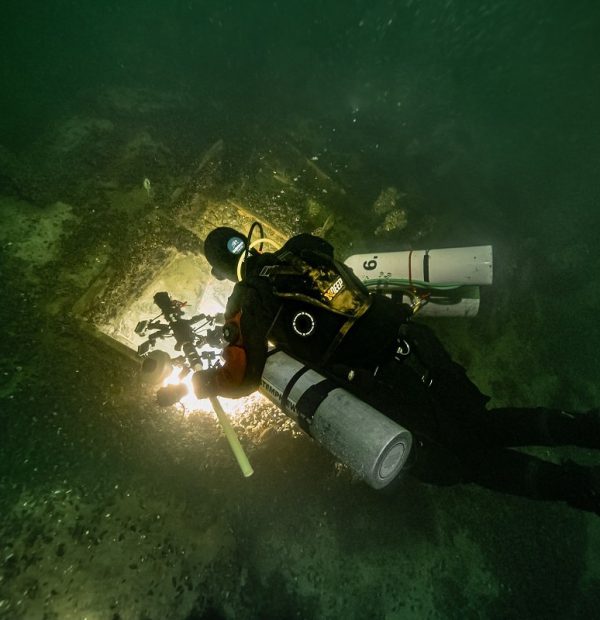
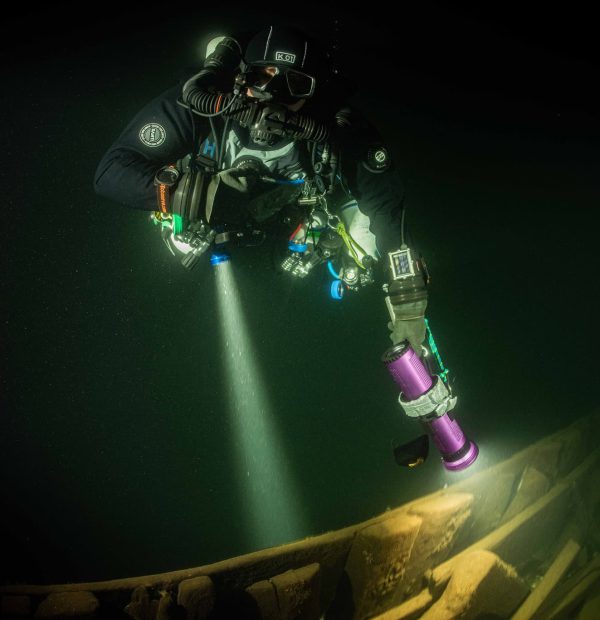
Almost a year ago, in August 2011, a group of underwater archaeologists from the Polish Maritime Museum in Gdańsk led by Waldemar Ossowski started rescue research on the wreck lying on the dredging line of the Martwa Wisła waterway. The first soundings and sonar pictures indicated that a piece of the side lay on the bottom. Diving into the dark waters of the Martwa Wisła, the archaeologists did not yet know what awaited them.

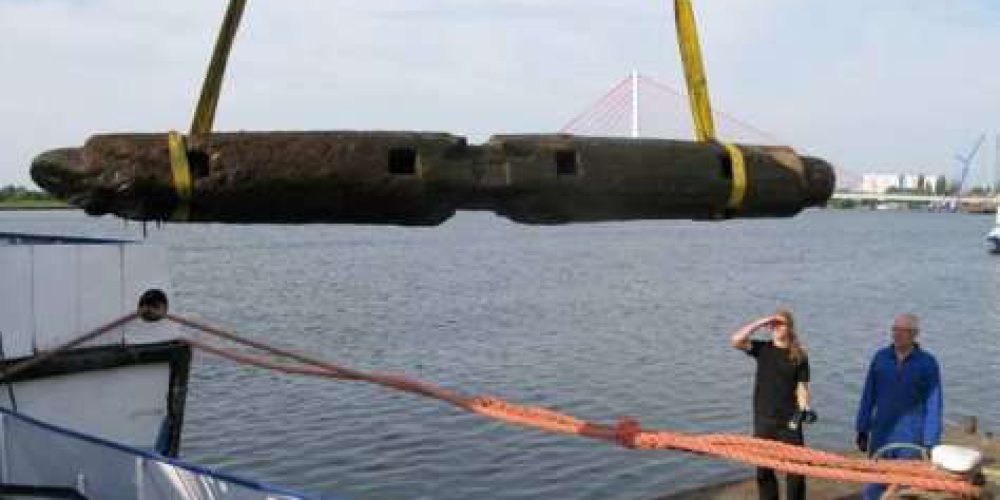
Work on the wreck began by cleaning it of silt using an air ejector. The plan was then to raise the wreck, which at the time appeared to be just a section of the side. The work was hampered by visibility ranging from 0 to 0.5 metres. When the desludging began, the wreck turned out to be bigger than expected… much bigger. The first surprising discovery was a large round beam. After cleaning this element from the silt, it turned out that it was a completely preserved anchor windlass, almost 4m long!
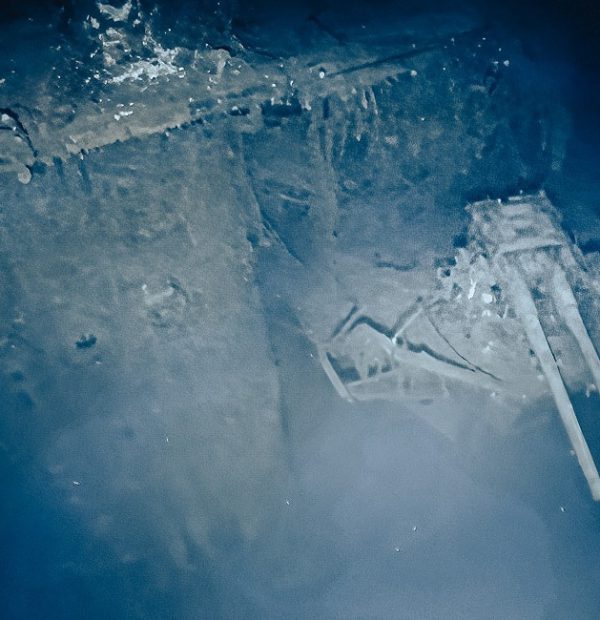
This was the first sign that the vessel the scientists were dealing with was larger than they expected. The next element, which was actually felt, because it is difficult to talk about seeing anything in that water, was a then still unidentified beam. Following it with the ejector and slowly desludging, the archaeologists reached the second part of the wreck. It turned out that the beam was a deckhouse, and at its other end, 3 m under the silt, there was not only the side, the half-deck, but also the bulwark.
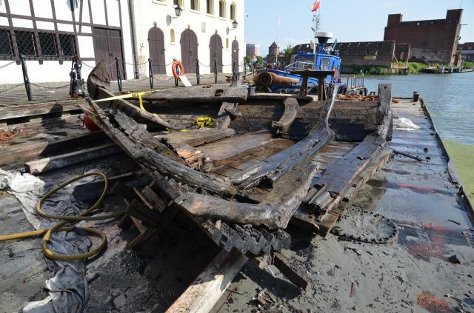
Usually wrecks are preserved only in the bottom part, and in the Martwa Wisła there is a ship which has a completely preserved body up to the very sides. Wrecks preserved in such condition are extremely rare. So it was time to find the beginning and the end of the ship. It was the aft end. Digging along the sides of the ship, archaeologists expected to find the end.
After several days of work, we succeeded. A thylakoid was found, preserved in very good condition. However, there were still surprises waiting for the scientists, and what surprises! During the exploration of the stern, it turned out that there is still an aft deck, with a superstructure! In the middle of the deck, however, there is a hatch leading below. So the exploration headed towards the bow. Surprises were also waiting there.
As in the stern, the deck and the hatch leading under it, but also the anchor windlass yoke and the anchor hatch were preserved. It remained only to clean the interior of the wreck, estimated at 23 metres in length and about 7 metres in width. The difference in level between the highest and lowest points of the wreck is 4m. This is exactly how much mud had to be removed in order to get to the bottom and get a fairly complete picture of what is under water.
The rest of the article can be found here.
Source: podwodna.net